Self-Assessment for the Communication Design CHE Program, with a Focus on Visual Design: Is this program right for me?

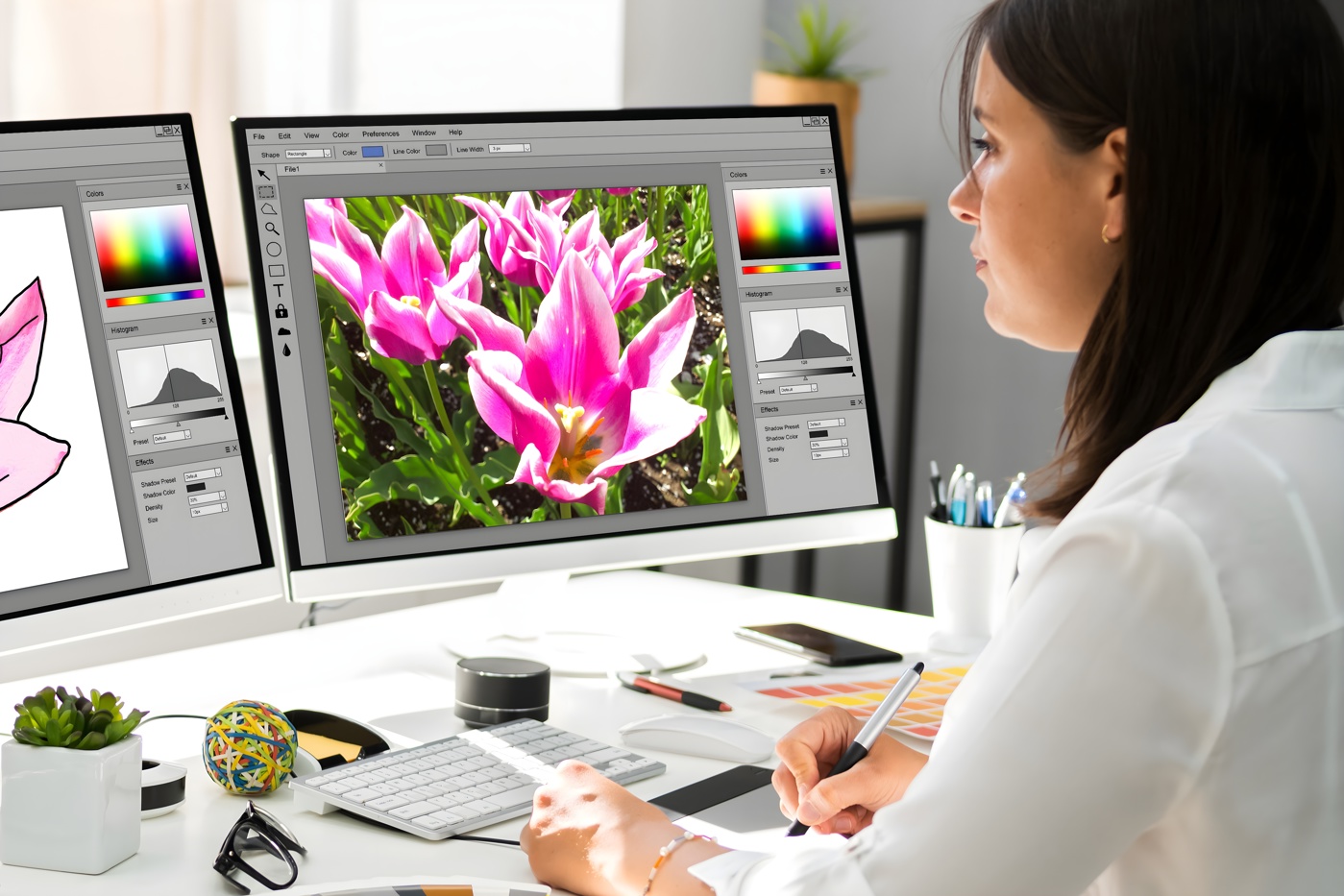
A communication designer with a CHE is designing a flyer.

Find out here whether a career as a communication designer (CHE) with a focus on visual design is right for you, and whether an CHE program leading to a degree as a “Certified Communication Designer (CHE)” is the right path for you.

Start

What is a typical workday like for communication designers with a focus on visual design as part of a CHE programme?

Communication designers with a CHE are employed by consulting firms in the communications industry, recording and production studios, or in the marketing, communications, or advertising departments of larger companies, or they work as freelancers. They are usually part of an interdisciplinary team of marketing specialists, photographers, programmers, and others, where they also take on technical and leadership roles (e.g., project management).

Visual Design is one of eight specializations in the CHE diploma program in Communication Design. The other specializations are:

  • Animation and Motion Design
  • Film and Audiovisual Media
  • Photography
  • Interaction Design / Interactive Media Design
  • Design & Commercial Art
  • Communication Design in Space (Spatial Design)
  • Illustration and Comics

Communication designers with a CHE in visual design use media “codes” (e.g., brand slogans) to convey messages about products, brands, or services, thereby ensuring the desired impact reaches the relevant target audiences. To do this, they conceive, stage, design, and produce various analog and digital communication media such as newspapers, books, posters, flyers, and advertisements. Visual designers have a significant influence on everyday culture.

Communication designers with a CHE focus on visual design conduct client meetings to determine exactly what the client wants and what the assignment entails. As a first step, they develop ideas based on the assignment, create visual designs, and formulate a concept. Early on, they incorporate current developments (e.g., more sustainable printing technology) as well as visions for the future. They then present the design and concept to the client. The client’s feedback is incorporated into the subsequent development of a prototype.

In their work, communication designers with a CHE diploma are in constant dialogue with various experts—including on cultural and social trends as well as technological advancements.

Question 1:

Do the job duties described here match what you're looking for? Would you like to work as a certified communication designer (CHE) in visual design?

Who is the continuing education, further training program for Certified Communication Designer (CHE), Visual Design, intended for? What qualities and skills are required?

The communication design program at a College of Higher Education (CHE) is suitable for

  • Individuals who wish to further develop their strategic, conceptual, and visual skills and abilities
  • People who want to lay a solid foundation for their career in design


Male and female communication designers with a CHE should possess the following personal qualities and skills:

  • Technical understanding (software skills: InDesign, Photoshop, Illustrator, virtual reality, etc.)
  • Media literacy
  • Creative and design skills
  • Willingness to experiment
  • A flair for art, creativity, and design
  • Independent and reliable way of working
  • conceptual skills
  • Sense of responsibility
  • Customer and service orientation
  • Confident and professional demeanor
  • Organizational skills
  • quick to grasp new concepts, thirst for knowledge
  • Communication Skills and Foreign Language Proficiency
  • Team and conflict management skills

Question 2:

Are you part of the target audience for this continuing education, further training program, and do you possess the necessary personal qualities?

Admission Requirements for the CHE Program in Communication Design

The admission requirements for the CHE program in Communication Design are set by the Colleges of Higher Education. Generally, the Colleges of Higher Education require:

  • A Federal VET Diploma (EFZ, Maturität, secondary school diploma) or a college or university degree (FPE, AFPE, bachelor’s degree from a University of Applied Sciences or a university, master’s degree from a University of Applied Sciences or a university); experience in a creative field is advantageous—but not required

or

  • Exceptional artistic talent (admission based on portfolio)

and

  • Basic Knowledge and Skills in Visual Design*
  • several years of practical experience in visual design or a related field
  • successful admission process; (the process is defined by the schools and typically includes several components, such as a letter of motivation, submission of a portfolio, or an aptitude interview)

Other possible conditions:

  • For part-time degree programs, at least 50% of the time must be spent in relevant practical work in communication design.


* For applicants with no prior artistic training or with some missing qualifications, many schools offer preparatory courses, which are sometimes mandatory. Only after completing the mandatory courses will an appointment be scheduled for the admissions process.

Question 3:

Do you meet the requirements for admission?

Subject matter and content of continuing education, further training

Colleges of Higher Education have some flexibility in designing their communication design programs. Which topics are covered therefore depends in part on the individual colleges.

In general, all CHE programs follow the “Communication Design CHE” framework curriculum. The following topics are frequently covered:

  • Editorial, Corporate, and Interaction Design
  • Branding
  • History of Art, Culture, and Design
  • Presentation technology
  • Production Technology
  • Marketing (Social Media, Content, SEO)
  • conceptual work
  • Drawing
  • Photography and Visual Worlds, Moving Images
  • Typography
  • Layout
  • Concept and Analysis
  • Creative Communication and Dialogue
  • Leadership skills

Question 4:

Are you interested in this content and would you like to acquire knowledge in these subject areas?

Costs of continuing education, further training

The costs for the continuing education program leading to a diploma in Communication Design (CHE), with a focus on visual design, are set by the Colleges of Higher Education. They vary considerably and include different ranges of services.

If you have been living in Switzerland or Liechtenstein for at least 2 years, you should expect the following costs*:

  • Costs for theAdmissions Process:up to about CHF 200
  • Course costs:Approx. CHF 1,500–2,000 per semester for programs for participants with relevant prior education (= total of CHF 9,000–12'000 in course fees) or CHF 3,100–9,200 per semester for programs for participants without relevant prior education (= total of approximately CHF 18,600–55,200)
  • Thesis Semester/Exam Fee:up to about CHF 2,000
  • Work materials
  • possiblyadditional costsfor enrollment, teaching materials, project weeks, etc.

* The programs at Colleges of Higher Education receive financial support from the cantons. To receive cantonal funding, the following conditions apply:

  • At least two years of residence in Switzerland or Liechtenstein
  • The course is included on the list of courses eligible for subsidies; this list can be viewed on the EDK (Swiss Conference of Cantonal Directors of Education) website.

Question 5:

Are you able to cover approximately CHF 9,000–12,000, or possibly more than CHF 55,000, for course fees plus other expenses?

Program Structure, Duration of Study, Number of Class Hours, and Workload

  • Training models:The program is offered as a part-time program or as a full-time program that includes internships.
  • Duration of study: The CHE program leading to a degree in Communication Design (CHE), with a focus on visual design, has a modular structure and lasts at least 6 semesters for part-time study and at least 4 semesters for full-time study.
  • Number of class periods: The program consists of 3,600 learning hours for students with a relevant Federal VET Diploma and 5,400 learning hours for students without a relevant Federal VET Diploma. Learning hours include in-person instruction, time for independent study, individual assignments, guided work in studios, group projects, seminars, assessments, etc., as well as time spent applying what has been learned in practice and supervised internships. The respective school determines how these learning hours are allocated.
  • Learning effort: You should set aside enough time for lesson preparation and follow-up, as well as for self-study—how much depends on your prior knowledge, work style, learning pace, and the training model you’ve chosen. We recommend setting aside at least 6–8 hours per week for the part-time model.

Question 6:

Can you find the time for lessons and self-study?

Qualification Process, Diploma, and Title

The final examination for the Communication Design CHE program, with a focus on visual design, consists of a thesis as well as oral and written exams.

Schools are responsible for administering the exam; therefore, the graduation process may vary from school to school.


Diploma and title

Graduates who successfully complete the program receive an Advanced Federal Diploma of Higher Education (Achtung: Engl. gleich wie eidg. Dipl. HFP) and are entitled to use the protected professional title “Certified Communication Designer (CHE) / Certified Communication Designer (CHE), specializing in visual design» and the optional English subtitle “Professional Bachelor's Degree» to lead.

In French: “Designer with an ES degree in visual communication / Designer with an ES degree in visual communication, Professional Bachelor”

In Italian: “Designer with a SSS diploma in visual design, Professional Bachelor’s degree”

In English (recommended, not a protected title): “Professional Bachelor in Visual Design”

Question 7:

Do you think you can pass the diploma exam, and would you like to earn this degree?