New: Professional Bachelor's & Professional Master's
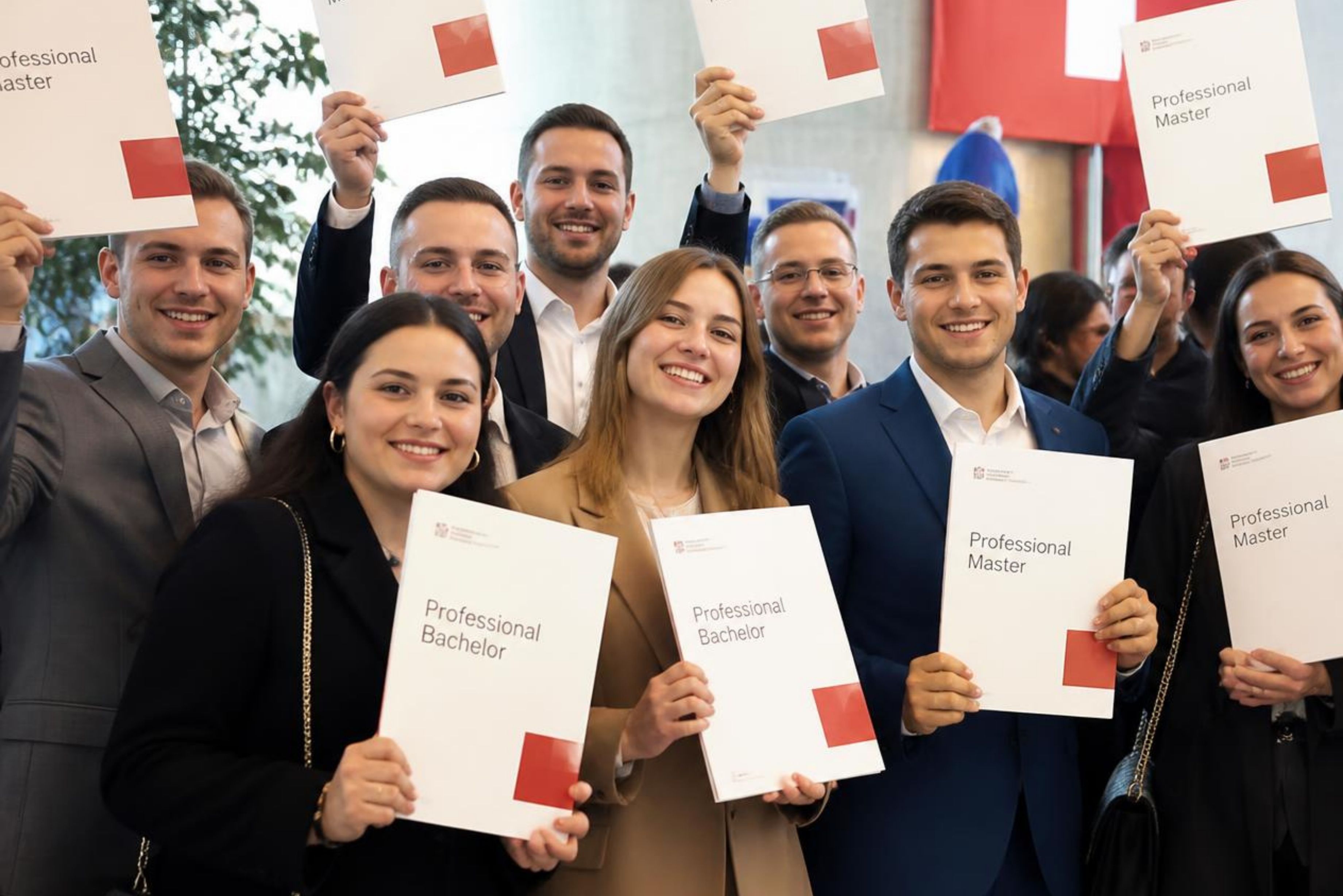
With the new titles “Professional Bachelor” and “Professional Master,” higher vocational education in Switzerland will have degree designations that are more easily understood internationally. The new titles are intended to highlight the equivalence of vocational and academic education without replacing Switzerland’s established degrees and educational pathways.
Swiss vocational education and training is a model of success. But anyone working internationally with a higher vocational education degree faces a problem: titles such as “Certified Business Administrator (CHE),” “Federally Certified,” or “with a Federal Diploma of Higher Education” are often difficult to understand outside of Switzerland.
This is exactly where the new “Professional Bachelor” and “Professional Master” degrees come in.
The new designations are intended to make higher vocational education more understandable and visible both nationally and, in particular, internationally. Graduates should be able to use a title that more clearly conveys the level of their practice-oriented further training.
The goal here is not to turn a vocational training certificate into a college degree. Higher vocational education remains a distinct educational pathway with a strong practical focus.
Rather, the new titles are intended to make it clear that vocational and academic education are different but equally valid career paths.
The course titles are based on the various degrees offered in advanced vocational education.
The Professional Bachelor's degree is intended for qualifications at the first level of higher vocational education. These include, in particular, Federal Professional Examinations and degrees from Colleges of Higher Education.
The Professional Master's program is designed for the advanced level and is specifically geared toward the Advanced Federal Professional Examination (AFPE).
This gives well-known Swiss degrees a designation that can be more easily understood outside the Swiss Education System.
The world of work is becoming more international. Skilled workers are employed by global companies, relocate abroad, or apply for jobs with employers who are not familiar with the details of the Swiss Education System.
A title that can be understood internationally can really make a difference here.
At the same time, the introduction of the new degrees enhances the perception of higher vocational education and training within Switzerland. Those who continue their education after completing a vocational apprenticeship and earn a challenging degree in higher vocational education and training possess extensive specialized knowledge and valuable practical experience.
The new titles make this qualification more visible.
The familiar Swiss degree titles aren't simply disappearing. Rather, the new titles supplement the existing system with designations that are more easily understood internationally.
For graduates, this can be particularly helpful when applying for jobs, on LinkedIn, or in international business. Instead of having to explain a Swiss degree in detail right away, the title itself provides an indication of the level of qualification.
The introduction of professional bachelor's and professional master's degrees is therefore more than just a change in titles.
It also underscores the importance of vocational education and training in Switzerland: A successful career does not necessarily require a college degree. Advanced vocational education and training offers a practical and challenging path to higher-level professional and leadership roles.
With these new titles, this approach is now becoming more visible linguistically as well—in Switzerland and beyond.
In short: The degrees will remain practice-oriented and reflect Swiss characteristics. However, their new titles will be more easily understood internationally.
Do you have any other questions about the Professional Bachelor's or Professional Master's program? We're available at ourChat, in theEducational counselingor alsoby e-mailgladly there for you personally!
Share this article with your network—maybe this information will inspire others around you, too!